Are your guests from today coming back?
-
- juni 27, 2021
- Ongecategoriseerd
- 9 mins read

A question of conscience to start with
Do your guests return? A matter of conscience perhaps? Because maybe you can’t really give an exact answer? There are probably guests who come back, but how many and which ones, that’s often a bit vague.
While research shows that if a guest has visited 3 to 4 times, you can consider them a “regular guest” and assume that these guest(s) will return more regularly.
So it’s very important to get a better grip on this, as it’s one of the most important key figures (besides attracting new guests and enticing guests to spend more during their visit) to increase your revenue.
This week I’d like to focus more on the aspect of how to entice guests to return, and additionally the data: how do you know that guests are returning and what percentage that is?
Key Figures
Roughly speaking, you can distinguish three types of key figures on which you can measure your revenue, I see it already; How to get guests (new guests), how to ensure they spend more during their visit (a higher average spend per guest) and how to ensure guests return?
Whether a guest is new or returning is often hard to see in the data. There are systems for this, where you can track this. It means creating a kind of account per guest etc. These are often systems that we in hospitality don’t always want and are too extensive, especially for smaller independent hospitality businesses.
A simple trick I heard (again) recently: put an asterisk in the reservation system before or after the guest’s name, so you can see if someone is new or a returning guest. Not only useful to estimate how often guests return, but also nice for the serving staff to know. This way you can use the info to welcome someone (“nice to see you again”… etc).
How do you ensure guests return?
That’s the central question and I want to zoom in on that a bit more. Because even if you can’t (or don’t want to) measure exactly which guests return and how often they return, it’s important to pay attention to this. It’s simply much easier to get your revenue from returning guests than to constantly attract new guests.
Guests are enticed to return more often through roughly 3 pillars:
- Product: is the menu in order? Does the offering match what the guest had in mind?
- Behavior: is the staff friendly and correct? Do they ensure the guest feels welcome?
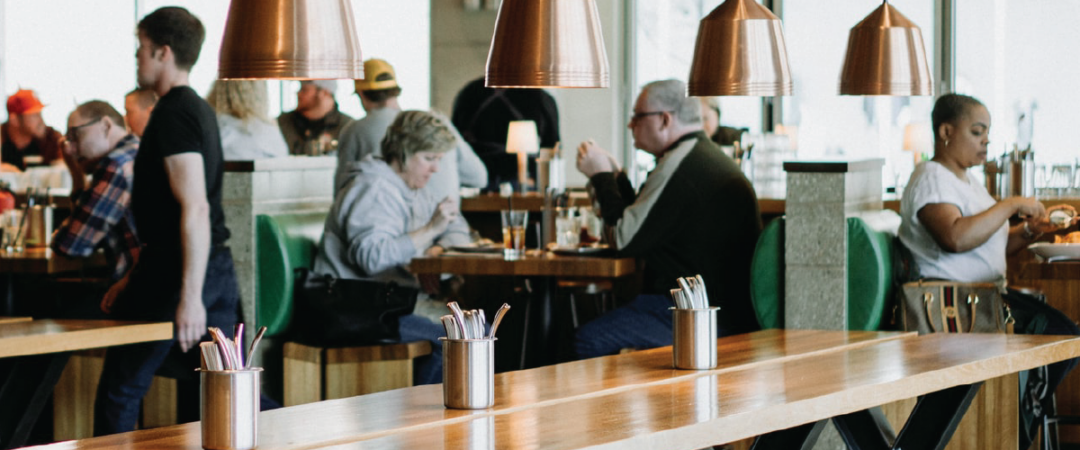
- Environment: is your restaurant, terrace, coffee shop, brasserie etc. a pleasant place? Is the atmosphere good? Are the chairs comfortable? Are the toilets clean?
So it’s important to have everything in order to entice guests to return as much as possible from all three of these pillars.
But how do you do that concretely? The question is then the ever-recurring question; who is your guest? Because if you know that, you also know if the menu connects, if the environment matches what they like, AND how to address them.
The better you know the guest, the better you know if what you’re offering them matches what they want.
Let’s make it even more concrete
If you want the guests you get tonight to return, it’s important to know who they are. By creating a guest profile, in which you record the characteristics of your guest, you can much better respond to what they find important. From there, you’ll then look at what actions you can take to entice your guests.
Guests are often enticed by something that makes it more attractive to return. At a brasserie or coffee bar, introducing a loyalty card is a proven example for this; by offering a loyalty card for a free cup of coffee when the card is full, you entice people to return. For restaurants, it’s often different. A loyalty card doesn’t always work for everyone. For guests who are less price-conscious and just want to enjoy, other triggers work better. For example, personal attention or comfortable chairs. The delicious dishes on the menu or the fact that you as a service employee had a chat about the weather. Often it’s the combination of these things that ensure guests return. Accessibility also plays a role and the convenience you offer.
The tips
To give you some inspiration, I’ll show you some tips. Because working on returning guests must be done proactively and structurally. Then it actually ensures that guests like to stay with you.
Product:
- Products must of course taste good. This sounds logical, but the impact is sometimes underestimated. Guests don’t immediately complain if the soup is too salty, but they’ll tell their colleague about it the next day at work.
- Make sure you have a good and varied offering, with different choices of dishes. Create an offering where your guests can always find something tasty to choose from.
- Put “choose your own…”, “make your own…” on the menu. This ensures that guests experience more choice and therefore you can more easily connect to what they want. It’s not necessarily that guests will then choose, it’s mainly the feeling of freedom of choice that guests appreciate.
- Ensure you have a few (max 3) “heroes” in your offering. These are iconic dishes in which you are the absolute best in the entire city/region. Think for example of the best apple pie, hamburger, grilled cheese sandwich or tomato soup. By excelling in these, you can link your identity to these few dishes and these are the dishes that tell your story from your establishment.
- Also think about more dynamic communication about your menu with your guests. You could think about for example input from guests (via online campaign) on the menu (who submits the best recipe for a …) or perhaps you can make more on request. It also helps if you show more (online) of the specials you have daily or weekly on the menu.
- You can also let guests vote which dishes will return to the menu next season. This way guests feel they have a share in it and you entice them to come back in the new season as well. You can do this online, with a poll or similar, but if it fits your establishment, you could also do it for example with a tasting where guests throw ping pong balls or corks or .. (make something up yourself) in ice buckets of the dishes they’re voting for.
Behavior:
- Make sure every guest feels welcome. This goes without saying, but we’re talking about reasons why guests return. Good contact with guests is therefore crucial. Don’t let guests wait at the entrance, make eye contact and be friendly. It’s so logical, but it remains a point of attention.
- Let chefs come out of the kitchen (when there’s time) to show their face to guests. It helps in making connections and ensures that guests get an image of who’s in the kitchen preparing their dishes.
- Everything depends on attention for the guest. So think carefully about what your staff needs to do and thus doesn’t contribute to that. What can you simplify, eliminate or arrange differently, so there’s more attention and connection with guests. By moving simple tasks from ‘behind the scenes’ to ‘among the guests’, you ensure that you make much more connection and can serve guests faster and better. Think for example about folding napkins, polishing glasses or perhaps even kitchen tasks that you can do much more in the sight of the guest (and thus focused on the guest).
- The conclusion of the visit is an important moment. It’s the last impression you leave with the guest. So think about how you can make this special(er). If there are children present; how do you make them happy?
For restaurant visits, you could for example hand over the coat or say goodbye in another way that gives guests a nice last impression. At a coffee bar or brasserie, it’s smart to work with a loyalty card and entice guests to come back again.
Environment:
- To check how the environment can contribute to guests returning, it’s smart to map out the entire process of the guest’s visit. This already starts online. Does the guest feel welcome? Can they find all information easily? Do they perhaps receive a nice and spontaneous email or message when they’ve made a reservation?
- The rest of the route that the guest takes until they go home again is also determining for the impression they get. Can they park easily for example? Is the entrance welcoming? Does it look clean and tidy? Is the toilet clean, is the children’s corner (if there is one) nice? Are the chairs comfortable? Is the table clean and spacious enough? Does it smell good? Do they have a view of the kitchen etc, are there nice seating areas? Is the music appropriate and at a good volume? Is the menu clean? And I could go on like this 😊
- It’s also always important here that you think carefully about what is decisive for your guest in returning. This can also be about good Wifi or that things are arranged for children.
Of course there are many more reasons why guests do or don’t return to you. You don’t have influence on everything. If your restaurant is too far out of the way, they will be less likely to keep coming than when it’s around the corner. But you have (consciously or unconsciously) a lot of influence on many things. Be aware of all elements that contribute to a pleasant stay for the guest and work on that daily. Much is logical, but too often simple things lead to a negative trigger for the guest, causing them not to return.
Don’t just use tips and “no complaints” as a measure
Some guests often give a small tip, even if they’re not really very satisfied. They think it’s proper. So it’s not always a measure. Substantial tipping is certainly a measure. Getting no complaints is similar: people often don’t complain if it’s just barely sufficient. They simply don’t return. Only when guests actually give a compliment do you know it’s good.
You can definitely talk with guests about what they really think of their visit. What could be even better? What really made them happy? Just ask a bit more, and indicate that they can say anything and that’s exactly what you’re waiting for. This way you often get a bit more info and it provides a different view on what helps guests or actually prevents them from coming.
Groetjes Suus

“Hey! I’m Suus and I guide hospitality entrepreneurs – also during and after the lockdown – to create more revenue, by focusing on better (online) visibility and improving the offering.“
I am connected to the Hospitality College